


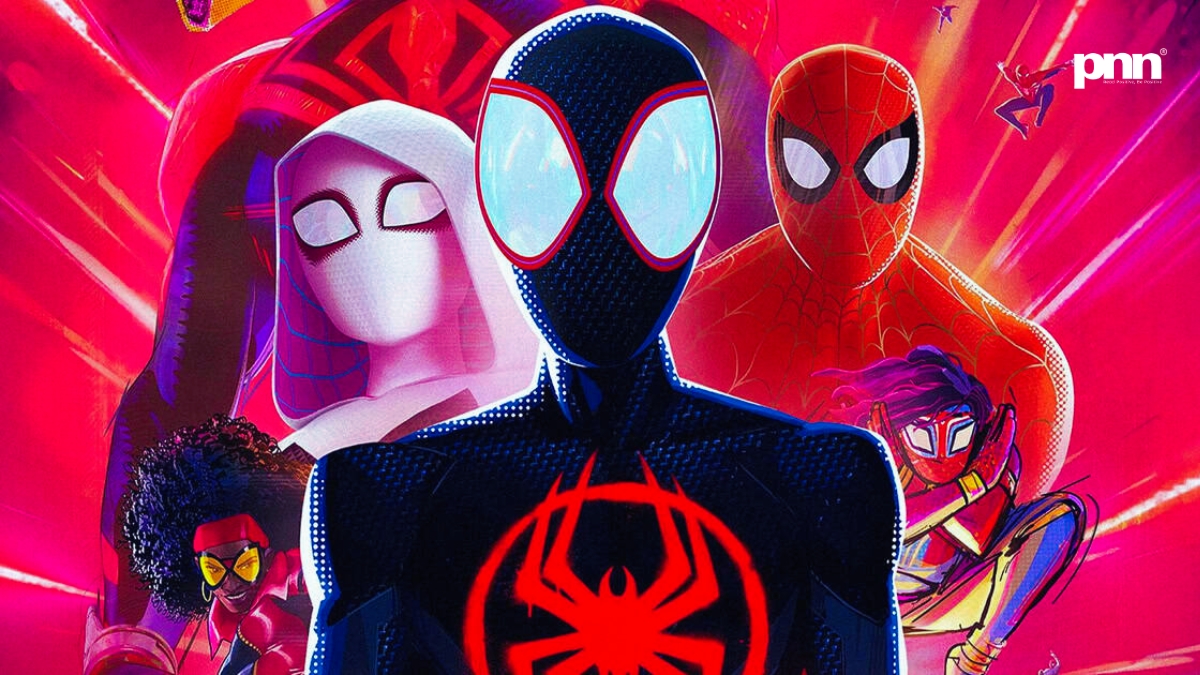
Las Vegas (Nevada), April 17: Spider-Man: Beyond the Spider-Verse has already been positioned as the final chapter. That word—final—carries more weight than anything shown at CinemaCon 2026 this week.
Because finishing something like this is harder than building it.
The earlier films didn’t follow rules. They replaced them. Spider-Man: Into the Spider-Verse broke the visual template. Spider-Man: Across the Spider-Verse expanded it until it almost collapsed under its own ambition. That’s where things were left—mid-motion, unresolved.
Now the question is simpler, and more difficult.
Can it stop at the right place?
It Was Never About Realism
The Spider-Verse films never tried to look real. That was the point.
They moved away from polish and leaned into distortion—frame rates shifting, textures colliding, entire scenes behaving like panels instead of sequences. It worked because it matched the character. Miles Morales was unstable in that world. The world looked unstable back.
What was shown this week suggests that approach hasn’t changed. If anything, it’s being pushed further.
That’s not automatically a strength.
At a certain point, escalation stops adding meaning. It just adds noise. The earlier films balanced that line carefully. This one doesn’t have the luxury of discovery anymore. It has to justify continuation.
The Story Is Already Set
Miles isn’t just running from enemies now. He’s running from a structure.
The idea is clear: a system that expects certain outcomes, certain losses, certain versions of a hero. Miles doesn’t fit that pattern. That’s the conflict.
It’s direct. Almost too direct.
Turning that into something that feels lived-in, rather than stated, is where this film will either hold or slip. Internal conflict works when it isn’t explained. It just shows up in decisions.
The Real Pressure Isn’t Narrative
The story will land. It usually does.
The pressure sits elsewhere.
Animation doesn’t have a stable ceiling right now. After Across the Spider-Verse, expectations shifted. Not gradually. Immediately. The standard changed mid-cycle.
Studios noticed. Audiences noticed more.
So this film isn’t just finishing a trilogy. It’s being used as a reference point for what animation can look like going forward. That’s not a creative problem. It’s an expectation problem.
And those tend to distort outcomes.
Ending It Matters More Than Extending It
Most franchises don’t end. They pause.
Calling this the final chapter suggests something else. A decision to stop, even when continuation is possible. That’s rare enough to stand out on its own.
But ending well requires restraint. Not scale.
There’s a version of this film that keeps adding—more worlds, more variants, more conflict. That version will look impressive. It won’t resolve anything.
The alternative is narrower. Focused. Less interested in expansion, more interested in completion.
That version is harder to make.
The Film Is Carrying Its Own Weight Now
Phil Lord and Christopher Miller have a pattern. Projects that shouldn’t work tend to work under them. That history creates confidence.
It also removes margin for error.
At this stage, the film isn’t being judged against other releases. It’s being judged against itself. Against two films that already changed how this space operates.
That comparison doesn’t need to be stated. It’s already in place.
What Actually Needs to Happen
Not more.
Just enough.
Miles doesn’t need a bigger conflict. He needs a resolved one. The film doesn’t need a louder finish. It needs a clear one.
Everything else—style, scale, expectation—has already been established.
This is the part where it either comes together or it doesn’t.
And there isn’t much space in between.
